
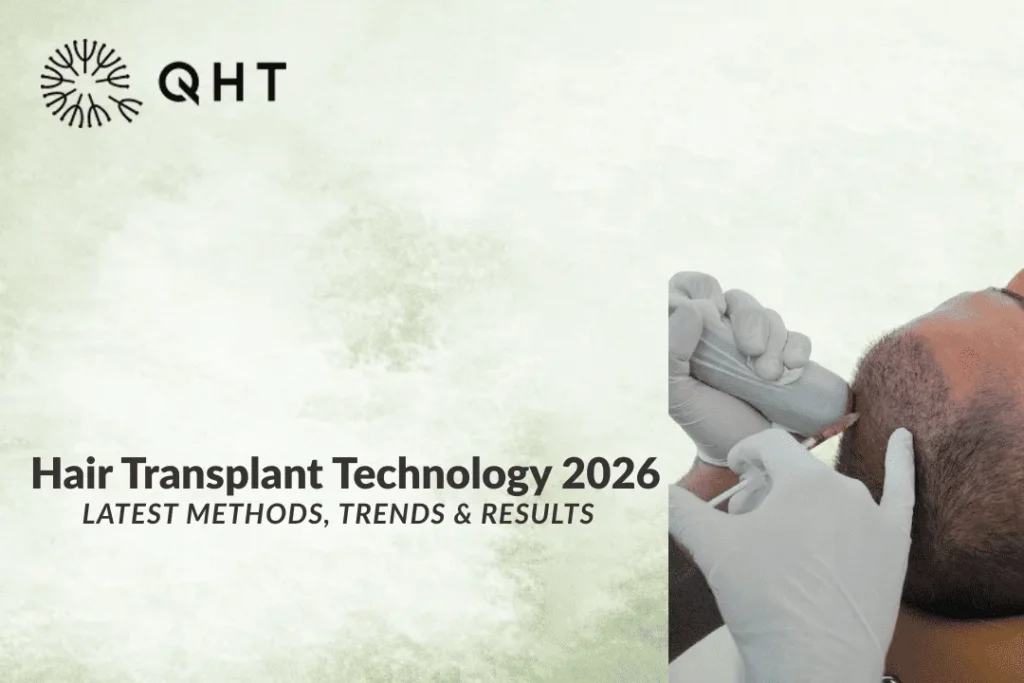
Hair transplant procedures have changed a lot over the last few years. In 2026, it is not about growing hair; it is about getting natural density, recovering fast, having minimal scarring, and getting long-lasting results. The latest hair transplant technology in 2026 has been improved by AI-assisted systems, robotic extraction, medicine, and precision implantation. If you are thinking about getting a hair transplant in Hyderabad or looking for a hair transplant clinic in India, understanding the latest hair transplant technology in 2026 can help you choose the right treatment.
In this blog, we will talk about the advancements, how they work, and what the future of hair restoration looks like.
How hair transplant technology has evolved.
Old hair transplant methods often produced hairlines, visible scarring, and longer recovery periods. Modern innovations now focus on getting higher density, minimal downtime, and high graft survival rates. This evolution has made procedures safer and more effective than ever.
What is the latest hair transplant technology in 2026?
The latest hair transplant technology in 2026 combines precision, automation, and regenerative medicine.
The leading innovations include:
- FUE systems
- DHI implantation
- Robotic-assisted transplantation
- AI-based planning
- Stem cell support therapies
- Enhanced PRP integration
1. Advanced FUE technology.
What is FUE?
FUE, or follicular unit extraction, is still considered one of the most trusted and advanced methods in 2026.
How it works:
Individual follicles are. Grafts are implanted into thinning areas.
Modern FUE has become more precise with improved tools and imaging systems.
Why FUE remains popular.
Patients choosing FUE hair transplant in Hyderabad prefer it because it has scarring, faster healing, natural-looking results and less discomfort.
Modern FUE systems also improve graft survival and density.
2. DHI or direct hair implantation.
DHI is one of the advancements in hair restoration.
What makes it different?
Hair follicles are implanted directly using implant pens without creating separate channels first.
Benefits:
Control over angle and direction, higher precision, dense and natural results, and faster recovery.
DHI has become one of the preferred technologies in 2026.
3. Robotic hair transplant systems.
Robotic systems are changing the future of hair transplantation.
Popular innovation:
AI-assisted extraction systems like ARTAS.
These systems:
Scan the scalp in 3D, identify the grafts, and extract follicles with high precision.
Benefits:
Reduced error, consistent graft quality, and faster procedures.
Robotic systems are increasingly being integrated into premium clinics worldwide.
4. AI-powered hair analysis:
Artificial intelligence is now being used for hairline design, donor area mapping, and predicting hair loss patterns.
AI-assisted planning helps doctors create natural and personalised results.
5. Dense hair implantation technology:
Modern clinics offering hair implantation in Hyderabad now use ultra-precise implantation methods.
Goal:
Achieve density without damaging existing follicles.
Benefits:
Appearance, better coverage, and a more natural hairline.
This technology is especially useful for hairlines and crown restoration.
6. Sapphire FUE technology.
Sapphire FUE uses sapphire blades of steel.
Benefits:
Smaller incisions, faster healing, reduced trauma, and higher-density placement.
This has become one of the most demanded modern techniques.
7. PRP-enhanced hair transplant:
PRP, or rich plasma therapy, is now commonly combined with transplants.
How it helps:
Speeds up healing, improves graft survival, and stimulates hair growth.
Modern PRP techniques are more advanced than earlier versions.
8. Stem cell hair therapy:
Stem cell-based hair restoration is one of the exciting developments.
Concept:
Stem cells are used to regenerate or stimulate hair follicles.
Potential benefits:
Increased density, improved follicle health, and better long-term growth.
While still evolving, stem cell therapy is considered a part of the future of hair restoration.
9. Long. No-shave transplant:
2026 Techniques now allow hair transplantation and no-shave procedures.
Benefits:
Minimal visible recovery and more discreet procedures.
These are increasingly popular among professionals and women.
Why modern hair transplants look more natural.
Modern technologies focus heavily on hair angle, direction, density distribution, and hairline artistry. This prevents the pluggy” appearance seen in older procedures.
Future of Hair Transplant: What to Expect Beyond 2026
The future of hair transplants is expected to focus on greater precision, personalisation, and regenerative medicine. Researchers and technology developers continue to explore new ways to improve hair restoration while making procedures even less invasive and more effective.
Some of the most promising developments include:
- AI-assisted treatment planning for more accurate hairline design and donor area assessment.
- Enhanced robotic systems that may further improve graft extraction while still working under a surgeon’s supervision.
- Regenerative therapies, including exosome-based treatments and stem cell research, are being studied for their potential to support follicle health and recovery.
- Hair cloning research is aimed at multiplying healthy hair follicles in laboratories. While this technology is still experimental and not commercially available, it could transform hair restoration in the future.
- Improved graft preservation techniques that help maximize follicle survival and increase transplant success rates.
- Personalised treatment plans based on an individual’s hair characteristics, scalp condition, and pattern of hair loss.
Recovery time in 2026:
Modern technologies have significantly reduced downtime.
Typical recovery:
- 3–7 days for healing, less redness and swelling, and faster graft stabilisation.
- Are these technologies safe?
Yes, when performed at the hair transplant clinic in India.
Modern systems improve precision, hygiene, safety, and success rates.
However, a surgeon’s experience still matters more than machines
Cost of hair transplant technology:
Advanced procedures may incur costs due to modern equipment, AI systems, robotic assistance, and skilled expertise. Pricing varies depending on the number of grafts, technique used, clinic reputation, and location.
Hair transplant in India: why it’s growing rapidly.
India has become a destination for hair restoration because of advanced technology availability, experienced surgeons and affordable pricing compared to global markets.
Cities like Hyderabad are becoming known for hair restoration services.
How to choose the technology:
The best technique depends on hair loss stage, donor area quality, hair type, and desired density.
- A consultation with experts is essential.
- The future beyond 2026.
Experts believe the future may include hair cloning, 3D-printed follicles, advanced stem cell regeneration, and AI-guided transplantation systems.
Final thoughts:
The latest hair transplant technology in 2026 is transforming hair restoration into a precise, natural, and comfortable procedure.
Conclusion:
Hair transplantation in 2026 is no longer about replacing lost hair; it’s about creating natural, long-lasting, and highly personalised results. Technologies like DHI robotic FUE, AI-assisted planning and stem cell therapies are shaping the future of hair restoration. If you are considering best hair transplant clinic in India, choosing a clinic experienced in methods such as FUE hair transplant in Hyderabad and dense hair implantation in Hyderabad

