
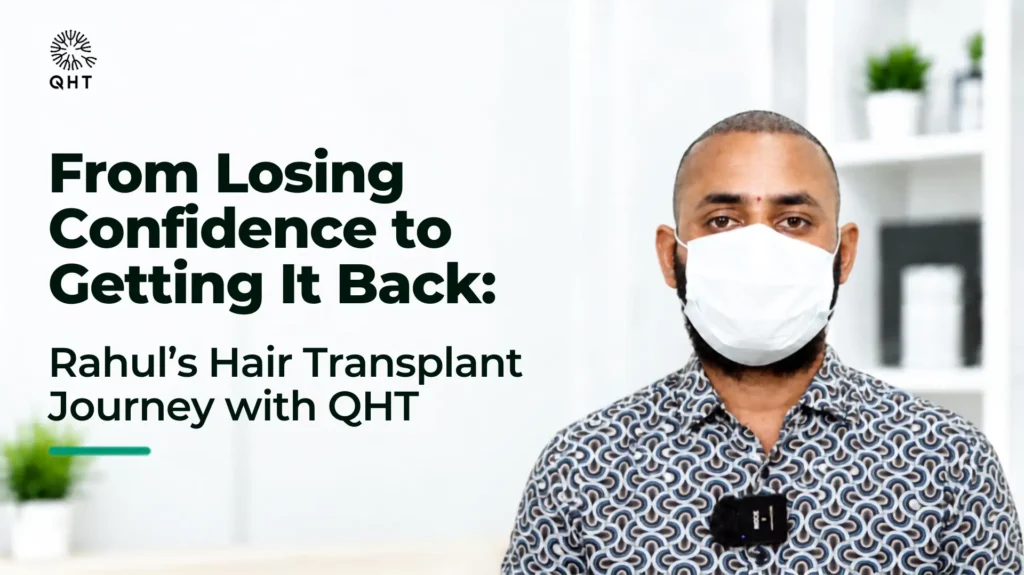
For many men, hair fall starts as a small worry a few extra strands in the comb, a receding patch here and there but for some, it slowly turns into something that affects daily life. That’s exactly what happened to Rahul, a 34-year-old QHT patient, who spent nearly 5 to 7 years quietly dealing with hair loss before finally deciding to do something about it. This is his story, in his own words, from the day he booked his consultation to his recovery two-and-a-half months after surgery.
Where It All Started?
Rahul first noticed his hairline receding several years ago. Over time, it wasn’t just the front his crown area started thinning too, until friends and family began pointing it out. “I only really noticed how bad it had gotten when the people around me started mentioning it,” he shared. Everyday moments like combing his hair or washing it in the shower became reminders of how much he’d lost.
He believes a mix of factors contributed to his hair fall a hectic, unhealthy lifestyle with little to no exercise, long hours working outdoors, and a genetic pattern, since close family members also experienced significant hair loss. Despite the growing frustration, Rahul never turned to home remedies, oils, or over-the-counter treatments. Instead, the emotional toll built up quietly skipping parties, avoiding photos, and a steady dip in his self-confidence.

Finding QHT
Rahul had been considering a hair transplant for about six months before he came across QHT through a YouTube ad. He researched the results shown and eventually reached out to the QHT team, who asked him to share photos of his scalp. After a doctor reviewed his case to plan a hairline and density that would suit his facial features, they estimated he’d need close to 5,500 grafts. Before committing, Rahul spoke to a friend who had already gone through a hair transplant a conversation that gave him the confidence to move forward.
Naturally, he arrived with questions: How much pain would there be? How long would the surgery take? Would he really get his old look back? On his first visit, he went through an allergy test, document verification, and a detailed consultation with his doctor, where every doubt — from bleeding concerns to surgery duration — was addressed clearly before he agreed to proceed.
The Hairline Design Process
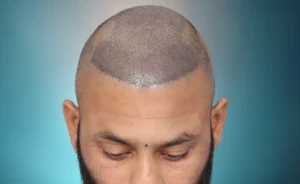
One of the most critical, and often underestimated, steps in any hair transplant is hairline design it’s what determines whether the final result looks natural or artificial. For Rahul, the QHT team began with a scalp wash and trim, followed by a detailed trichoscopy examination. Based on his facial proportions, a custom hairline was carefully marked, measured precisely from the glabella point (the center between the eyebrows), and extended to cover the other thinning areas of his scalp. This precision groundwork is what allows the transplantation itself to be executed with accuracy, and it’s a step QHT surgeons have refined across more than 10,000 successful hairline transformations.
Surgery Day: Managing the “Fear of Pain”
Like most patients, Rahul’s biggest worry going into the operation theatre was pain. What he found instead was a clean, well-organized setup and a doctor who checked in with him throughout the procedure, asking repeatedly if he felt any discomfort. “The pain was so minor, it felt like nothing more than a small ant bite,” he said. He received refreshments, fruit, and a light lunch during the procedure, which spanned two days — starting around 8-9 AM and wrapping up by early evening each day.
In total, Rahul received 4,800 grafts using the latest transplantation technique matching exactly what he’d been told beforehand, with no last-minute changes to the graft count. Before leaving, the department head personally checked on him, reviewed his aftercare, and wrote out his complete medication and diet schedule.
Recovery and the First PRP Session
By the time Rahul returned for his first PRP session a month after his surgery he was already noticing his donor area recovering well, with the previously affected patch beginning to fill in after regular head washes. He followed his post-op instructions closely: spraying the transplanted area every 30 minutes for the first 15 days, avoiding dust exposure, sticking to a light diet (rotis, dal, and vegetables), and cutting out alcohol, smoking, and heavy foods. He also avoided the gym for the initial recovery period and used a surgical cap when stepping outdoors.
Two-and-a-Half Months Later: Visible Progress
By his second PRP session, Rahul was in the middle of the natural shedding phase a normal part of the hair transplant process where transplanted hair sheds temporarily before regrowth begins. He reported zero pain or discomfort in his scalp, and while the shedding phase was expected to continue for another couple of months, he had already started noticing his hairline reappearing faintly in the mirror. Compliments from people around him only added to his growing confidence.
Rahul was candid that visible results take time sustained growth depends on following the prescribed diet and medication schedule diligently. But he was clear about one thing: “My decision was 100% right, and I had my surgery done at the right place.” He specifically praised the transparency of the process the graft count promised matched exactly what was delivered, with no discrepancies. When asked to rate his experience, he gave QHT a full 10 out of 10, saying there was no reason to rate it any lower.
Why Stories Like Rahul’s Matter?
Hair fall isn’t just a cosmetic issue as Rahul’s journey shows, it can chip away at confidence over years. What made the difference for him was clear communication, transparent planning, and a team that addressed every doubt before, during, and after the procedure.
If you’re exploring your own options, our detailed guide on hair transplant in Hyderabad covers everything from techniques to what to expect on surgery day, and if PRP therapy is part of your recovery plan, you can check PRP hair treatment costs in Hyderabad to understand what’s typically involved.
Every hair transplant journey is different, but with the right planning, experienced specialists, and consistent aftercare, transformations like Rahul’s are far more achievable than they seem.

