
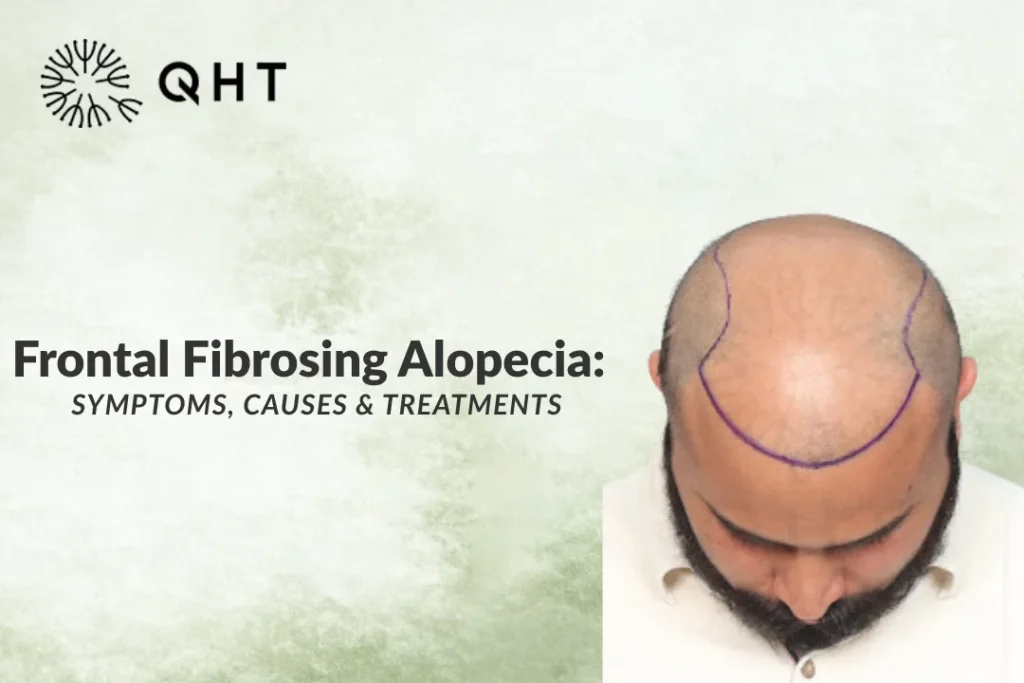
Hair loss is a problem that can really affect how we feel about ourselves and our emotions especially when it happens around the hairline. Frontal Fibrosing Alopecia is one condition that people are talking about more these days. This kind of hair loss gets worse over time. Can cause us to lose our hair forever if we do not get help from a doctor early on. So it is an idea to learn about the signs of Frontal Fibrosing Alopecia, what causes it and available Frontal Fibrosing Alopecia treatment. This way we can get help on time and keep our hair.
What Is Frontal Fibrosing Alopecia
Frontal Fibrosing Alopecia is a type of hair loss that scars the scalp on the front and sides. It makes our hairline move back slowly. Can also affect our eyebrows, eyelashes and the hair on our body. This condition happens often in women who have gone through menopause but men and younger women can get it too.
Frontal Fibrosing Alopecia is different from hair loss that happens for a time. It damages the hair roots forever. When the hair roots get scared it is very hard for our hair to grow back. That is why we need to find out if we have Frontal Fibrosing Alopecia as soon as possible.
Signs of Frontal Fibrosing Alopecia
When you notice the signs of Frontal Fibrosing Alopecia on it can really help with treatment. Some common things that happen with Frontal Fibrosing Alopecia include:-
- The hairline at the front of your head starts to move slowly
- Your eyebrows get thinner. You lose them completely
- The skin around your hair follicles gets red or swollen
- You feel itchy or burning sensations on your scalp
- You lose hair around your temples
- Sometimes you even lose hair on your face or body
- The skin where your hair follicles used to be becomes smooth and shiny
Causes of Frontal Fibrosing Alopecia
We still do not know what exactly causes Frontal Fibrosing Alopecia. People who study this condition think that a lot of things can contribute to it happening.
1. Autoimmune Factors
A lot of people who know about Frontal Fibrosing Alopecia think it is a condition where the body’s immune system does something. The immune system attacks the hair follicles that’re healthy and this causes inflammation and scarring on the scalp. This is what happens with Frontal Fibrosing Alopecia.
2. Hormonal Changes
Frontal Fibrosing Alopecia is a common finding in menopausal women and therefore hormonal alterations could have a potential effect over hair follicles damage.
3. Genetic Predisposition
If someone in your family has Frontal Fibrosing Alopecia you might be more likely to get it. Some people might be more likely to get Frontal Fibrosing Alopecia because of their genes.
4. Environmental Cause
People are still trying to figure out if things like the products we use on our skin, sunscreens or other things around us can trigger Frontal Fibrosing Alopecia. They want to know if these things can cause Frontal Fibrosing Alopecia to start.
Frontal Fibrosing Alopecia Treatment Options
There is no complete cure for Frontal Fibrosing Alopecia right now. Frontal Fibrosing Alopecia treatment can help slow it down and reduce inflammation. It can also help keep the hair that you already have.
Medications
Doctors might give you these things:
- Corticosteroid injections
- Corticosteroids
- Anti-inflammatory medications
- Immunomodulatory medication
- Oral medications like hydroxychloroquine
- Finasteride or dutasteride for some people
These Frontal Fibrosing Alopecia treatments try to stop inflammation and prevent more hair follicles from getting damaged.
Platelet-Rich Plasma Therapy
This therapy uses the things from your own blood to help your scalp. It might make the hair follicles that are still alive healthier. It can also work well with Frontal Fibrosing Alopecia treatments.
Low-Level Laser Therapy
This therapy can help blood flow to your scalp. It can support hair growth in areas where the hair follicles are still working.
Can Hair Transplant Help in Frontal Fibrosing Alopecia
Many people ask if a hair transplant in Hyderabad or other places can bring back hair loss because of FFA. It really depends on if the disease’s stable.
Hair transplant surgery is usually only thought about after the condition has been quiet and not changing for a time. If the disease is still active and hair is falling out a transplant might not work well. Hair loss might keep happening.
A good hair transplant doctor will look at:
- How active the disease is
- How much scarring there is
- How much healthy hair is available to transplant
Conclusion
Frontal Fibrosing Alopecia is a condition. It can cause hair loss if you do not treat it. Early diagnosis, and medical help are vital to slow down its progression, and save your actual hair. There are treatment options that can help manage signs and make your scalp healthier. If you need solutions, checking out the best hair transplant clinics in India can give you expert advice. When thinking about a treatment plan, for Frontal Fibrosing Alopecia you should get care from specialists who know what they’re doing. Frontal Fibrosing Alopecia patients need to be careful and take the steps to manage their condition.

