
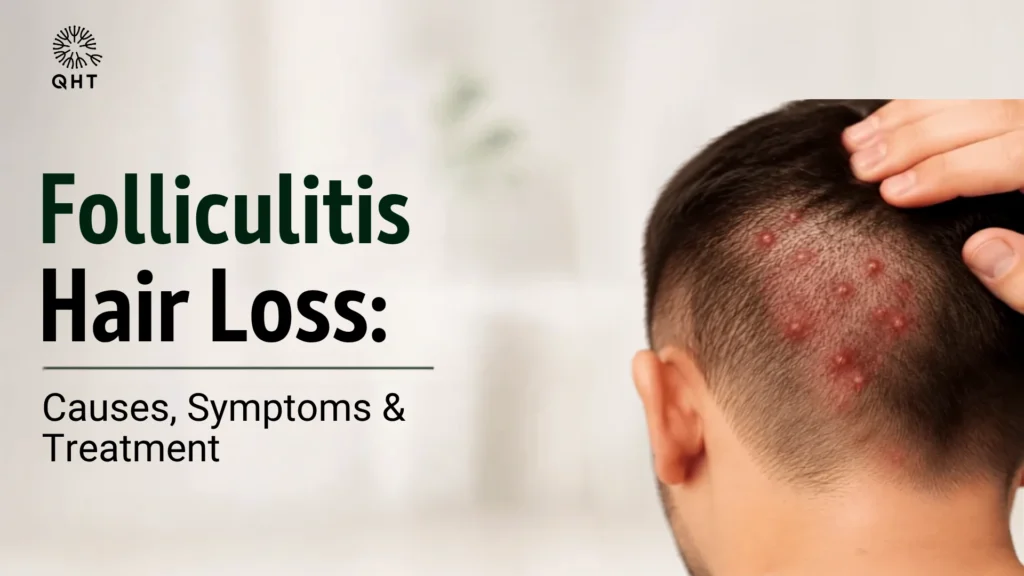
Folliculitis is a condition where your hair follicles become inflamed or infected, resulting in shedding hair in the patch concerned . It may manifest anywhere on the body, including the face and scalp, and left unattended; it has even been known to result in irreversible hair thinning! Fortunately, fortunately – folliculitis can be addressed with the correct treatment, provided it’s diagnosed early on.
What Is Folliculitis?
What to expect when getting hair loss in these areas The medical definition of folliculitis means the inflammation and/or infection of a hair follicle. Folliculitis is an infection caused by the bacteria, fungi, and virus or simply by friction and or skin irritation.
It’s a common issue with hair loss which many are unaware of until they find new balding spots on their scalp, or beard.
This hair loss condition is much more common than many know, and it occurs among both women and men, at all ages.
How Does Folliculitis Cause Hair Loss?
How an inflamed follicle becomes weak. From this week, the hair that produces it becomes loose & falls out. It gets better gradually & starts growing from the damage & flaring.
If a follicle repeatedly becomes damaged & inflammed; a scarring begins and when a follicle becomes scarred – hair cannot grow out anymore.
So… it makes sense why early diagnosis and treatment for folliculitis hair loss is so very important?
Common Causes of Folliculitis Hair Loss
Identifying what causes folliculitis is important for effective treatment as well as trying to prevent it. Here is a list of the most common:
- Bacterial infection – caused by a bacteria named: Staphylococcus aureus. Can be acquired by piercing small cuts, shaving nicks or clogged pores.
- Fungal infection – Fungal infections such as tinea capitis (ringworm of the scalp) can invade the follicles. Ringworm also causes patchy hair loss.
- Ingrown hairs- for after shaving or waxing, ingrown hairs can cause inflammation of the follicles (most common on the scalp and face)
- Over sweating- Sweat along with heat blocks pores and provides the ideal breeding ground for bacteria.
- Tighter hairstyles-Hair that is scraped back tightly strains the follicle and facilitates a condition called folliculitis.
- Hormonal imbalances – An increase in oil production caused by hormonal fluctuations can obstruct hair follicles and cause infections.
- Compromise immune system – more prone to. Diabetics, HIV., those who are on an expensive medication.
- Cleaning dirty combs or sharing towels- These spread infection very rapidly, particularly in warm, humid weather.
Symptoms to Watch Out For
Symptoms of Folliculitis Hair Loss People tend to miss out on these signs of folliculitis as they mostly start very lightly:
- Red, itchy, small bumps on the scalp. These may often be mistaken for acne or pimples. They can appear with or without an opening/ pus.
- Patches of inflamed skin that may appear raised or swollen on the scalp.
- Red and tender areas around hair follicles
- Hair that may come off readily from the patches in question (you may have it come off as part of hair combing or shampooing).
- Oozing or crusting from the follicles.
When it is time to see a doctor, it goes without saying that you do not ignore these issues as skin problems; these are more related to how follicles are functioning in the area, or what is going wrong with your hair. If you detect any of these symptoms on your head or body it is time that you contact a hair professional.
You need professional help for such problems.
Treatment Options for Folliculitis Hair Loss
The cause of your ailment, along with its severity will determine how you will be treated. Here are the general methods you’ll find effective for follicle issues. Mild: • Take a warm cloth and dab a small number of times per day to minimize irritation and inflammation • Make use of antiseptic cleaners to preserve cleanliness of your scalp.
- Steer clear of tight styles and sharing hair tools.
- Bacterial folliculitis
- Your doctor may issue you prescription with topical or oral antibiotics
- Use of cleansers that contain ketoconazole or selenium sulfide may come recommended.
Treatments for fungal include-topical antifungal medications or oral .You also will need to keep your scalp dry. Long-term follicle problem: There is also evidence that using laser hair removal treatment could lessen Ingrown hairs. Corticosteroid medications for inflammation. Explore and treat the initial health problem
Can Hair Grow Back After Folliculitis?
Yes, in the vast majority of people’s cases, hair regrows back the same once we are able to treat the underlying inflammation or underlying infection that is causing the folliculitis. If there is some extensive damage to the follicle by over prolonged and unchecked folliculitis then the follicle may have become scarred, and then may not be able to naturally regrow. For this people would need to consider and to investigate surgical hair transplantation for which is for the best hair transplant in Hyderabad usually the referred type comes in with what is called ScarringAlopecia. The patient has had unchecked and untreated folliculitis for years and it has led to scarring alopecia and after examination by a Hair surgeon at Hyderabad we decide whether the patients’ case will be suitable for the hair transplantation or not.
Folliculitis on the Beard: A Separate Concern
But Folliculitis doesn’t limit itself to just your scalp. The beard area is equally exposed to it, especially for men who have to shave daily and those who naturally have curly facial hairs which have a tendency to grow inwards.
Beard folliculitis leads to:
i) Soreness and redness in the chin, neck and jaw region.
ii) Pimples which look like acne containing pus.
iii) Patchy growth of beard in the region as your follicles are damaged or inflamed.
Iv) Long lasting itching and pain after shaving.
A lot of the patients suffering from patchy beard growth or scarring post Beard folliculitis choose to get a Beard Transplant in Hyderabad done to treat this permanently. With Beard Transplant one can grow a thicker, normal and natural looking beard as healthy hair follicles are implanted on to the scars.
Preventing Folliculitis Hair Loss
Always remember it’s easier to stop lice than treat it. Simple changes include:
Rinse and clean your hair, scalp, and beard region using a suitable antifungal wash.
- Ensure you do not lend combs, towel, or any hair-related accoutrement.
- Tie extreme updo hairstyles which cause strain to the follicles.
- Change razors on a frequent basis and use them in the way hair is growing.
- Keep your scalp dry after swimming or rigorous exercises.
Take an extremely nutritive diet plan for your resistant frameworks well.
When Should You See a Specialist?
In cases where home remedies over a week or two don’t yield results, or the issue recurs frequently, consult a hair specialist. Recurrent hair loss due to folliculitis left untreated can silently damage hair follicles and follicles before they become evident as visible hair loss. For Patients With Recurrent scalp infection who are also considering their restoration options – hair transplant clinics focused on international patients from all parts of the world with a strong base in India have begun to offer complete scalp care evaluation along with customized non-surgical and surgical restoration.
What to Expect at a Hair Clinic?
During Folliculitis Assessment With a Hair Specialist What can you expect the assessment to involve? Examination of your scalp or facial hair with a dermascope Blood investigations if it looks like a systemic cause, such as diabetes or hormone imbalance Cultures of the lesion if we suspect a bacterial or fungal infection An individually developed treatment plan using medications and a range of hair & scalp care solutions We want to manage your active folliculitis but importantly, we want to try and prevent further damage and preserve healthy follicles.
Folliculitis and Hair Transplants: What You Should Know
After folliculitis caused hair loss. First the active infection needs to be cleared fully in order to undergo hair transplant surgery. No hair transplant surgeon in Hyderabad is going to perform a hair transplant over an actively infected or inflamed scalp.
Once the scalp is clear the transplanted hairs can start to regrow.
The best hair transplant surgery in Hyderabad for such patients can help in regaining back there lost hair with effective FUE procedures for loss caused by inflammation of beard hair follicle can take; beard transplant in Hyderabad procedures to restore and regrowth facial beard in an effective manner with hair transplantation methods like the best Hair Transplant in Hyderabad treatment.
Conclusion
Folliculitis hair loss underappreciated by manyFolliculitis could lead to irreversible thinning and eventually permanent hair loss, if not caught and treated, right at the initial stages. Getting timely medical diagnosis for any scalp and hair skin infection, along with a consistent scalp hygiene routine is the trick. Depending on whether you require medication, a diet change or something drastic – a qualified Hair specialist can lend their expertise.
If, on the other hand, you’re looking into hair transplant options as the damage to your hair already needs corrective procedures, then it might be well worth exploring options at the best Hair Transplant clinic for international patients or some well-renowned Hair specialist near your location.
The earlier the problem gets addressed, the more likely you are to have a faster, and a better recovery rate.
Frequently Asked Questions (FAQ)
1. Can folliculitis really cause hair loss?
Yes. Folliculitis can weaken hair follicles, causing temporary hair loss. If inflammation continues for a long time, it may lead to permanent scarring and thinning.
2. Will hair grow back after folliculitis treatment?
In most cases, hair grows back once the infection and inflammation are treated. Early treatment gives the best chance of healthy hair regrowth.
3. What are the first signs of scalp folliculitis?
Early signs include itchy red bumps, small pus-filled pimples, scalp tenderness, crusting, and increased hair shedding from the affected area.
4. How can I prevent folliculitis on my scalp and beard?
Keep your scalp clean, avoid sharing towels or combs, shave carefully, reduce sweating, and avoid tight hairstyles that irritate hair follicles.
5. Can I get a hair transplant after folliculitis?
Yes, but only after the infection is completely healed. A hair specialist will check whether your scalp is healthy enough for transplantation.
6. When should I see a doctor for folliculitis hair loss?
See a hair specialist if symptoms last over two weeks, keep returning, or cause patchy hair loss, pain, swelling, or scarring.

