
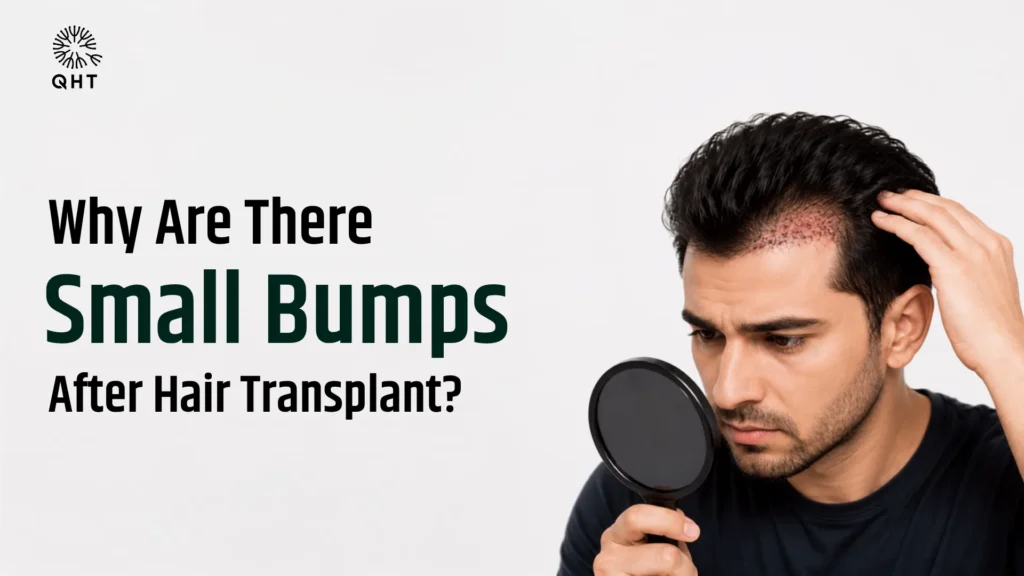
What if I am worried about the small bumps following my hair transplant? You shouldn’t worry too much, bumps are a completely natural part of the healing process following a hair transplant procedure. They are formed by the small cuts made into the scalp for each implanted hair, and are the way in which the scalp heals after an incision is made.
In the vast majority of cases, they clear themselves up within a number of weeks.
However, it is worthwhile to understand their cause, what sort of duration and circumstances you should worry about them.
What Causes Bumps After Hair Transplant?
With hair transplantation, thousands of minute punctures are created on the transplant site to implant the individual hair grafts on. Similar to what happens to skin when it sustains an injury, the body undergoes an inflammatory process when it suffers the skin pricks of micro-surgery to accelerate the process of healing.
This forms the minuscule bumpy bits you observe on the scalp after the hair transplant surgery which lasts on the skin for some days or weeks post operation. It does not signify that something is wrong- rather it indicates that the skin on the scalp is recuperating at an expedited pace.
There are a number of specific reasons to the bumps’ emergence:
i) Graft settlement: One reason is that the hair follicles sit in place as they set into the skin tissue, causing some small bumps.
ii) Scab formation: Dried plasma and blood form dried scabs around each hair follicle. These little scabs result in the formation of bumps that resemble zits.
iii) Swelling and inflammation: The hair follicles become mildly inflamed by the skin around it to accelerate recovery and promote healing, causing the bumps on the scalp.
iv) Ingrown hairs: In a handful of incidents, new hair could curl below the skin and then grow towards the outside of the skin surface that formed a small bump called as folliculitis decalvans.
How Long Do the Bumps Last?
The vast majority of bumps that develop post-transplant resolve naturally in two to four weeks. Here is what you may expect:
Days 1-5: Scalp is generally red, may swell slightly and little crusts may form over each graft.
Days 5-14: Scalps will dry and scabs naturally peel away. The size of bumps start to decrease.
Weeks 2-4: Scalp feels much flatter and smoother. Most bumps should be resolved by this time.
After 4 weeks: transplanted hair starts to shed (which is perfectly normal) and the hair follicles go into a rest phase prior to growth of new hair.
Bumps that do not resolve within four to six weeks or that appear painful, draining or growing in size must be assessed by your surgeon.
Are These Bumps the Same as Folliculitis?
Not always, but it can be. It is an inflammation or infection of the hair follicle causing red, pimple type bumps in the scalp.
There can be issues with post-transplant folliculitis in some patients, usually occurring between day 2 and day 6 post surgery. The bumps look and feel similar to acne and can feel itchy and tender. In the majority of mild cases they resolve themselves but if the bumps are severe or are spreading the specialist will prescribe an antibiotic cream or short course of oral medication.
This should not be confused with normal scabbing and swelling that will occur in all patients that have had transplant surgery. The difference between both issues is that the bumps caused by folliculitis will be deeper, redder than normal, may have a discharge of pus, and will feel like a problem with the skin rather than just part of a scar.
What Should You Avoid Doing?
In the first few weeks the appearance of these bumps is greatly influenced by your hair transplant scalp care routine. What you should avoid:
i) Do not scratch the bumps. Picking at the bumps can displace the grafts early on or could possibly affect grafts in the short-to-long term through infection and scarring. This is absolutely vital.
ii) Avoid putting any styling products or harsh chemicals on to your scalp.
iii) Do not let your scalp receive direct sunlight on the bald scalp areas for a good one month.
iv) Be gentle with your hair washes using the allocated hair shampoo, and avoid scrubbing the areas.
v) In the first two weeks it is advised you skip a strenuous work out as there can be an increased chance of infection through excessive perspiration.
When Should You See a Doctor?
Though bumps are common, you should immediately report to the Hair Transplant Clinic in Hyderabad in the following cases:
i) If bumps are constantly increasing in size and more painful.
ii) If you discover any pus and abnormality in scalp
iii) If you develop fever and other flu-like symptoms after surgery.
iv) If the bumps do not reduce in about 4-6 weeks.
V) if there is abnormality in hair loss from other regions besides the transplant zone.
How QHT Hyderabad Supports Your Recovery?
At QHT Hyderabad, all aftercare is given as much attention as the transplant itself. Each patient gets thorough post procedure guidelines before they leave the clinic and 7 days a week telephone and video support from their support team. You won’t have to wait for a day to have your new problem sorted in case of some strange new bumps or irritation in the recovering area.
Patients looking for extra boost for hair regrowth post the transplant can opt for PRP hair treatment cost in Hyderabad the clinic itself.
This makes use of your own platelet- rich plasma to heal the scalp faster and nourish the already transplanted follicles giving you a stronger density of growth. Many patients go in for PRP sessions along with their transplant for this very reason. Patients experiencing general hair thinning and also needing the transplant may opt for dense hair implantation in Hyderabad, which packs in more follicles for greater volume.
Conclusion
Post-hair transplant,bumps on the scalp are perfectly normal and expected. As your scalp reacts to the tiny incisions that have been made throughout the treatment, bumps will appear, and will generally heal up in around 2-4 weeks without any treatment needed. The most important thing to do is to always listen to and follow your aftercare instructions, not to handle the areas too roughly, and most importantly, contact your surgeon if you have any doubts about the recovery process or the bumps persist longer than they should have.
If you want to learn what to expect from a hair transplant procedure and the road after it, and aren’t yet fully sure whether the procedure is for you and whether you are up for such commitment; have a free consultation with the QHT Hyderabad. The team will help guide you through step by step and ensure you are well informed of each and every aspect.

