
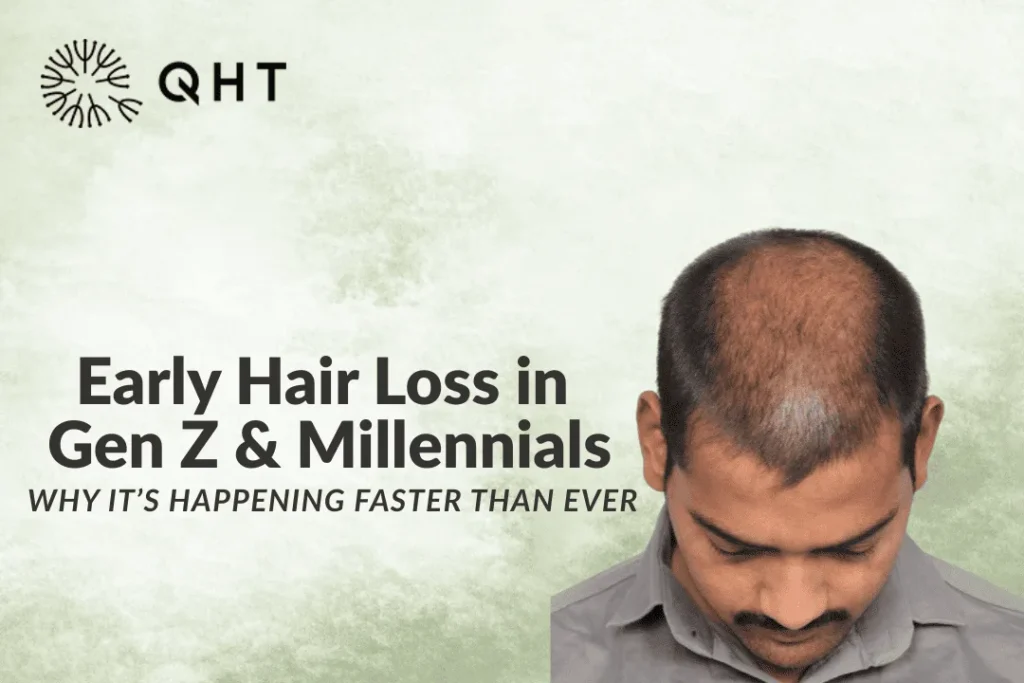
Losing hair is no longer a problem for people in their 40s or 50s. Nowadays, even teenagers and people in their 20s are losing hair. This has made a lot of people wonder, “Why is Gen Z losing hair so much? The reasons for Gen Z hair loss are different from the reasons for hair loss in people. These reasons include the way Gen Z lives their lives and the environment they are in.
If you are losing hair early or thinking about going to a Hair Transplant Clinic in Hyderabad you need to understand what is causing your hair loss. You should know that hair loss is a problem for Gen Z, and it is affecting them in a way. Gen Z hair loss is an issue, and people are looking for solutions. People are trying to find out why Gen Z is losing hair and how they can prevent it.
Is Early Hair Loss in Men a Growing Problem?
Yes, it is happening faster than before.
Compared to previous generations, Gen Z is experiencing the following:
- Hair loss at a younger age
- Receding hairlines in their 20s
- Hair loss due to stress
This is why many people are asking. Why are Gen Z men balding earlier?
The Main Reasons Behind Gen Z Hair Loss
One of the reasons for Gen Z male hair loss is the way people live their lives nowadays.
1. Lifestyle Has Completely Changed
Today’s lifestyle includes:
- Spending a lot of time in front of screens
- Not exercising enough
- Having irregular daily routines
Impact:
- Blood flow
- Weak hair roots
- More hair loss
2. Stress Is at an All-Time High
Life is full of pressure.
Stress triggers:
- Competing for jobs
- Comparing themselves to others in the media
- Worrying about money
This leads to a condition called stress-induced hair loss.
3. Poor Eating Habits
What you eat affects your hair health.
Common issues:
- Skipping meals
- Eating junk food
- Not eating protein
Result:
- Weak hair roots
- Slow hair growth
- More hair loss
4. Sleep Deprivation
Gen Z often does not get enough sleep because of the following:
- Using screens late at night
- Working or studying too much
Effects:
- Hormonal imbalance
- Not recovering well
- Hair loss
5. Increased Pollution Exposure
Living in cities exposes hair to the following:
- Dust
- Smoke
- Harmful chemicals
This weakens hair over time.
6. Hormonal Changes and DHT
Hormones play a role in hair loss.
DHT:
- Shrinks hair roots
- Causes thinning
- Leads to baldness
This is a major reason why Gen Z men are balding earlier.
7. Over-Styling and Chemical Damage
Using:
- Hair colors
- Heat styling tools
- Chemical treatments
Can damage your hair.
8. Genetic Factors Still Matter
While lifestyle plays a role, genetics is still important.
If you have:
- A family history of baldness
- You may experience hair loss.
Warning Signs You Shouldn’t Ignore
- Your hairline is moving back
- Your hair is thinning
- You are losing a lot of hair
- Your hair is weak and brittle
Finding out helps with treatment.
Is Gen Z Hair Loss Permanent?
It depends on the cause.
Temporary Hair Loss:
- Caused by stress or lifestyle
- Can be reversed with care
Permanent Hair Loss:
- Caused by genetics
- Needs treatment
Can Hair Loss in Your 20s Be Reversed?
Yes, hair loss in your 20s can often be slowed or even reversed, but the outcome depends on the underlying cause. Hair shedding triggered by stress, illness, poor nutrition, hormonal changes, or certain medications is usually temporary. Once the root cause is identified and treated, normal hair growth may gradually return over the following months.
However, if your hair loss is caused by androgenetic alopecia (male or female pattern hair loss), it is unlikely to reverse on its own. This type of hair loss is progressive, meaning it gradually worsens if left untreated. The good news is that early intervention can help preserve existing hair, slow further thinning, and improve hair density.
If you’ve noticed a receding hairline, increased hair shedding, or thinning around the crown, don’t wait until the problem becomes severe. A hair specialist can evaluate your scalp, identify the cause, and recommend a personalised treatment plan. Depending on your condition, treatment may include lifestyle changes, prescription medications, PRP therapy, or hair transplantation for advanced cases.
The earlier treatment begins, the better the chances of maintaining healthy, natural-looking hair.
How to Control Hair Loss in Your 20s?
1. Improve Your Lifestyle
Making small changes can help.
Focus on:
- Exercising regularly
- Sleeping properly
- Having a routine
2. Eat the Right Foods
Your hair needs nutrition.
Include:
- Protein
- Iron
- Vitamins
3. Manage Stress Effectively
Controlling stress is important.
Try:
- Meditating
- Doing yoga
- Practicing mindfulness
4. Medical Treatments
Doctors may suggest:
- Hair growth solutions
- Supplements
5. PRP Therapy
An option for hair transplant in India.
Benefits:
- Stimulates hair roots
- Improves hair thickness
- Supports hair growth
6. Hair Transplant
In some cases, a transplant may be needed.
Options:
- Visit a Hair Transplant Clinic in Hyderabad
- Compare hair transplant costs in Mumbai
A hair transplant gives long-term results.
Gen Z Hair Loss Treatment: What Actually Works?
The right treatment depends on why the hair is falling. Early treatment can help slow hair loss and protect existing hair.
Non-Surgical Treatments
- Minoxidil: Can help reduce hair shedding and support hair growth in people with pattern hair loss.
- Finasteride: May help men with genetic hair loss by reducing the effect of DHT. It should be used only with medical guidance.
- PRP Therapy: Uses the patient’s own blood components to support existing hair follicles and improve hair thickness.
- Treating Nutritional Deficiencies: Low levels of nutrients such as iron or vitamin D may contribute to hair loss. Treating a confirmed deficiency can help.
- Scalp Treatment: Conditions such as dandruff, inflammation, or scalp infections should be treated to maintain a healthy scalp.
Surgical Treatment
- Hair Transplant: For people with permanent hair loss and enough healthy donor hair, a hair transplant can restore hair in thinning or bald areas. A specialist should assess the hair-loss pattern and future progression before recommending surgery.
Can Minoxidil Help with Early Hair Loss?
Minoxidil is one of the most widely used and clinically proven treatments for early hair loss. It is commonly recommended for both men and women experiencing pattern hair loss or thinning hair. Applied directly to the scalp, minoxidil helps increase blood flow around hair follicles, extends the hair growth (anagen) phase, and stimulates weakened follicles to produce thicker, healthier hair.
Many people notice increased shedding during the first few weeks of treatment. This temporary phase, often called minoxidil shedding, is generally a sign that older hairs are making way for new growth. Visible improvements usually take three to six months of consistent use, although results vary depending on the individual’s age, genetics, and the stage of hair loss.
Minoxidil works best when hair follicles are still active. It is less effective in areas where follicles have completely stopped producing hair. For people with more advanced hair loss, specialists may recommend combining minoxidil with treatments such as PRP therapy or, where appropriate, hair transplantation to achieve better long-term results.
Because hair loss has many possible causes, it’s important to consult a qualified hair specialist before starting treatment. A proper diagnosis ensures that minoxidil is suitable for your condition and forms part of a personalised hair restoration plan.
Why is Gen Z More Affected Than Older Generations?
1. Digital Overload
Constantly using screens affects health.
2. Higher Mental Pressure
Modern competition increases stress levels.
3. Environmental Damage
There is more pollution now than before.
4. Unhealthy Diet Patterns
Common Myths About Gen Z Hair Loss
Myth 1: Only genetics causes hair loss
Reality: Lifestyle plays a role in Gen Z hair loss.
Myth 2: Hair oil can cure hair loss
Reality: It only helps with hair health.
Myth 3: Hair loss is permanent
Reality: Many cases can be reversed.
When Should You See a Doctor?
You should see a doctor if:
- You are losing hair
- Your hair is thinning
- Home care is not working
Experts at a Hair Transplant Clinic in Hyderabad can help you.
Importance of Early Action
Taking action early can:
- Prevent hair loss
- Improve hair strength
- Reduce the need for treatments
If you are wondering why Gen Z is losing hair, the answer is in lifestyle, stress, diet and environmental changes.
Conclusion
Hair loss among Gen Z and Millennials is becoming increasingly common due to a combination of genetics, chronic stress, poor sleep, nutritional deficiencies, hormonal changes, pollution, and modern lifestyle habits. While these factors can accelerate hair thinning, early hair loss does not always mean permanent baldness. Identifying the underlying cause at an early stage allows for more effective treatment and helps preserve healthy hair.
Simple lifestyle improvements, a balanced diet, stress management, and evidence-based medical treatments can make a significant difference for many people. If you notice persistent hair thinning, a receding hairline, or excessive shedding, seeking professional advice early can improve your chances of maintaining natural hair growth. Whether you require medication, PRP therapy, or a hair transplant, a personalised treatment plan offers the best opportunity to restore hair density and prevent further progression. Early action remains the most effective step toward long-term hair health.
Frequently Asked Questions
1. Why are Gen Z and Millennials losing hair earlier?
Modern lifestyles expose younger adults to chronic stress, irregular sleep, poor nutrition, pollution, and prolonged screen time. These factors can worsen hair shedding and reveal genetic hair loss at an earlier age.
2. Can stress really cause hair loss?
Yes. Long-term stress may trigger telogen effluvium, a condition where more hair follicles enter the shedding phase. Hair often regrows once the underlying stress is managed.
3. Is hair loss in your 20s normal?
Some hair shedding is normal, but noticeable thinning, a receding hairline, or widening part lines in your 20s should be assessed by a hair specialist to identify the cause early.
4. Can hair grow back after early hair loss?
Hair regrowth is possible when hair loss is caused by temporary factors such as stress, nutritional deficiencies, or certain medical conditions. Genetic hair loss usually requires ongoing treatment to slow progression and improve hair density.
5. Does lack of sleep contribute to hair loss?
Poor sleep can disrupt hormone balance, increase stress levels, and affect the hair growth cycle. Consistently getting 7–9 hours of quality sleep supports healthier hair.
6. Does diet affect hair growth?
Yes. Hair follicles rely on protein, iron, zinc, vitamin D, biotin, and other nutrients. A poor diet may contribute to increased shedding and slower hair growth.
7. Is pollution bad for your hair?
Air pollution can cause scalp irritation, oxidative stress, and the build-up of dirt and particles, which may affect overall scalp health and contribute to hair damage.
8. When should I consider a hair transplant?
A hair transplant is generally considered when hair loss has stabilised, there is sufficient donor hair, and non-surgical treatments alone are no longer providing satisfactory results. A specialist can determine whether you’re a suitable candidate.

