
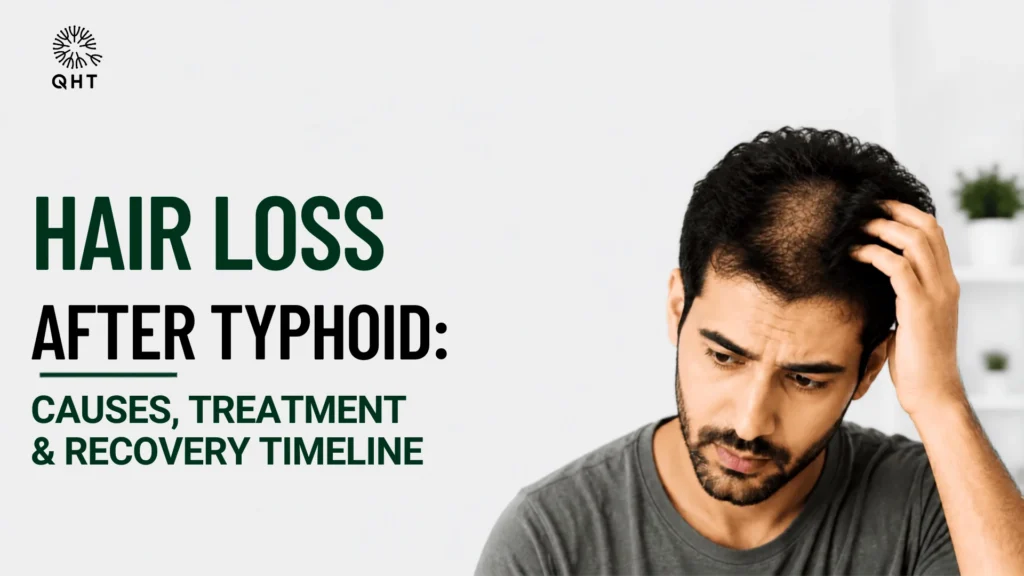
Typhoid is an infectious disease caused by bacteria which may spread to almost any part of the entire human body. Though there is one disease that comes after some times when you wouldn’t have suspected at all it is post Typhoid hair fall.
As it happens to many of us, you have alreadyRecovered from Typhoid but it’s still worried about hair loss, because of loss of hair or hair fall more than ever you got used to.
It happens to many people and can be temporary too.
Why Does Typhoid Cause Hair Loss?
When your body combats a bad infection such as typhoid, it undergoes such physical stress and strain. Such physical stress upsets the cycle of the growth of your hair. Instead of undergoing the growth stage, your follicles abruptly enter the resting stage altogether.
Just a couple of weeks from then all such resting hairs falling in a group may cause you to observe and perhaps become apprehensive about increased hair fall.
The medical term for this fall is Telogen Effluvium. Even high fever, nutritional deficiency while sick, extensive medication, lack of physical activity, extreme weakness all combined cause the stress.
When Does Hair Loss After Typhoid Start?
This point many find very peculiar. Hair loss does not happen while you are going through the disease. It happens only in weeks following the fever.
That is, when you realize you are losing hair, by then you may have probably forgotten about typhoid already.
This hair loss happens normally 2–3 months post-fever and reduces by the 3rd month naturally. So this post-typhoid phase will resolve with the process naturally without requiring much treatment. In case, this has occurred or is occurring in you, you visit a hair specialist in Hyderabad who will guide you further. For information purposes, those in Andhra Pradesh and Telangana are advised to consult an FUE Hair transplant clinic in Hyderabad.
How to Manage Hair Loss After Typhoid?
The first, most crucial step, though, to tackling hair fall post typhoid is to concentrate on getting your body to heal from within. This condition drains necessary nutrients from your body for weeks, hence, hair follicles have to be provided with them to stimulate a proper growth cycle again. Protein enriched diet along with sources like egg, lentils, fish, and paneer is of prime importance in this situation.
Iron and zinc also contribute to hair health, so making leaves, seeds, and nuts a part of your daily diet can bring in a good difference.
Apart from food, proper hydration and getting an adequate amount of sleep are also an essential part of recovery. Talking about treatment options, your doctors might recommend topical application of medication like Minoxidil in order to stimulate the quick growth of hair. PRP therapy has also been a popular treatment method as it uses your own growth hormones to enhance the existing follicles. For an in depth evaluation, best hair transplant in Hyderabad clinics provide detailed scalp assessments which would help to understand why your hair is falling and not to try treatment methods randomly.
Recovery Timeline: What to Realistically Expect
Knowing about the recovery course lets you stay a little calm during this period of life. Hair fall in most of the patients after they have healed from typhoid is temporary. Within six weeks from the day you heal from the illness, theHair will begin to shed and your scalp can feel a little more painful.
Between the second to third month, hair fall reaches its highest rate, and at this point, you may become too scared to deal with hair fall.
From the fourth month, shedding starts to decrease and hair starts growing on the scalp,by the sixth to twelfth months the hair fall stops gradually and it is at around one to one and a half year that there is maximum growth and increase in overall hair density can be observed.The best hair transplant in Vijayawada, Hyderabad, and other parts of Andhra can be done to gain hair permanently after proper analysis.
When Hair Loss Goes Beyond Typhoid Recovery?
In some instances, an illness such as typhoid, might serve as the catalyst. It then illuminates an existing pattern of hair loss that has gradually been developing under the radar. It causes serious aggravation to any kind of nutritional deficiency or even Androgenetic Alopecia.
If you see more than the typical shedding – like thinning at the front of your scalp or bald patches that are obvious or lasting-you definitely require far more attention to your diet plan or perhaps medical treatment.
An innovative therapy like the FUE Hair Transplant can offer a lifelong solution to your hair loss. Make sure that you consult an expert FUE hair transplant Hyderabad to help establish the stage of your condition and perhaps recommend regenerative treatment or eventually surgical intervention. Never do you want to leave your condition unattended and hope it resolves, due to the fact the later you’re, the higher number of remedy strategies you reduce out for on your own.
Conclusion
While hair loss is a reality with typhoid, it’s usually temporary and not something that you have to worry about. It’s part of your body’s recovery, and since it underwent a period of stress during the illness, your hair and body respond to it. You might notice changes and loss in hair thickness, but thankfully most individuals return to their previous volume of hair, with the correct nutrition, medical assistance and lots of care, in about a year.
Don’t freak out when you see hair falling out in your brush, but don’t ignore severe hair loss that lasts for more than 6 months.
In that scenario, it’s crucial to contact your hair specialist immediately, whether you’re searching for hair transplants in Hyderabad or a hair transplant clinic that might be a bit closer to you, to have it identified and properly handled as soon as you can.
Frequently Asked Questions(FAQ)
1. Can typhoid cause hair loss?
Answer:
Yes. Typhoid can cause temporary hair loss because high fever, infection, and physical stress push more hair follicles into the shedding phase.
2. How long does hair loss after typhoid last?
Answer:
Hair loss usually starts 2–3 months after recovery and improves within 6–12 months as your body heals and healthy hair growth returns.
3. Is hair loss after typhoid permanent?
Answer:
No. In most cases, hair loss after typhoid is temporary. Hair usually grows back naturally with proper nutrition, rest, and overall recovery.
4. What is the best treatment for hair loss after typhoid?
Answer:
A healthy diet, enough protein, iron, zinc, hydration, and medical advice are the best ways to support recovery and healthy hair regrowth.
5. Should I use Minoxidil for hair loss after typhoid?
Answer:
Minoxidil may help stimulate hair growth, but you should use it only after consulting a hair specialist to ensure it is suitable.
6. When should I see a doctor for hair loss after typhoid?
Answer:
Visit a hair specialist if hair shedding continues beyond six months, worsens rapidly, or you notice bald patches or significant thinning.
7. Can a hair transplant treat hair loss after typhoid?
Answer:
Hair transplant is usually not needed because post-typhoid hair loss is temporary. Doctors recommend it only if permanent hair loss is diagnosed.

