
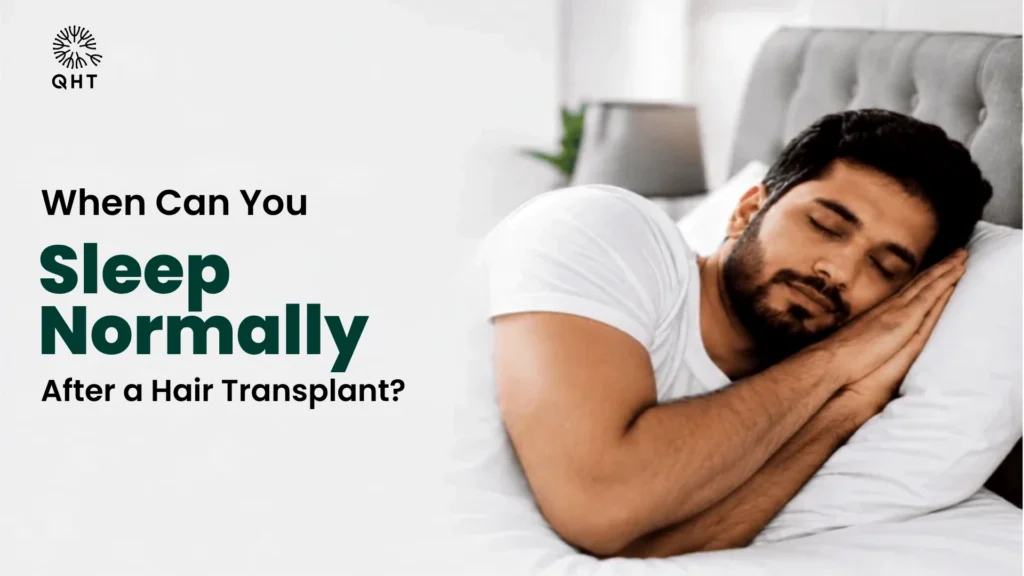
After your hair transplant surgery, it usually only takes between 7 and 10 days to start sleeping in a regular sleep position because your grafts are able to stay in place now. In the first few days after your procedure you actually really have to consider sleep since it’s so important that it doesn’t disturb the grafts and here’s exactly what you need to consider about sleep.
Why Sleep Position Matters After a Hair Transplant?
After surgery, the newly planted grafts rest on the scalp without any blood supply. This is why rubbing, pressuring, or moving the transplanted follicles on the scalp can cause them to become displaced. Rolling over in the middle of the night, for example, can impact survival rates of the grafted hairs, and impact overall hair density of the final outcome. No need to stress about the procedure, just a few adjustments necessary during this initial period
How Should You Sleep in the First Week?
During the first 5-7 days your surgeons advise sleeping with your head raised at around a 45 degree angle. This helps to:
i) Minimize swelling on your forehead and temples, which you are likely to notice after surgery.
ii) Take pressure off the recipient site on the crown of your head.
Sleep tips, Week 1:
i) Sleep on your back with two or three pillows piled up behind your head, or a travel neck pillow.
ii) If you tend to roll onto your side when you sleep, have someone help you put an extra pillow to your side so that you don’t move throughout the night.
iii) Do not sleep on your face-down.
iv) Place a clean towel or throw-away pillow case under your head.
v) Resists the urge to scratch your head; you may find it itches as it is healing which indicates a positive situation.
If only crown area was worked on then, discussing head elevation angle with your surgeon may be different.
When Can You Sleep Normally After a Hair Transplant?
The short version: After the first 7-10 days most people will comfortably be sleeping flat on their back-the grafts are secured enough not to worry about what’s going on when you’re using a pillow normally to sleep on.
But remember even after that initial stage, to:
1. Refrain from side sleeping until week two at least, and even then, be mindful if the grafts are positioned along the temples.
2. Be conscious not to have the hair pushed firmly into the pillow at the hairline creating unpredictable pressure.
3. Utilize a silk or satin pillowcase that allows less friction of the hair against the scalp as it grows in.
By week 3, most patients are sleeping with no restriction.
What Happens If You Sleep Wrong After a Hair Transplant?
If you only accidentally roll on to your grafted areas one time, nothing major will be damaged, however if you repeatedly put pressure on the transplanted zone during the first week you could suffer from:
i) Displacement of the follicle – in this situation the follicle may simply shift, and actually fall out before becoming secured in your scalp
ii) Patchy result—uneven thickness across your result due to hair falling out or dislodging before it can secure
iii) Redness/swelling caused by frictionThe healing period may have days when you notice a tiny crust or even a few hairs on your pillow when you wake up- do not fear this!
In the first two weeks of recovery shedding of hairs is natural- it’s just part of your body’s healing response and although the follicle sheds its hair; the root of the follicle remains safely attached to the scalp.
Other Sleep-Related Tips for a Smooth Recovery
Other factors apart from positioning for sleep are beneficial in accelerating the recovery process:
i) Avoid oiling your hair, shampoo, hair gel or other hair product before sleeping for two weeks.
ii) Ensure you maintain optimal temperature at night so that you don’t sweat. Excessive sweat can disturb the scalp.
iii) Limit your consumption of alcohol 24 hours prior to bedtime; it’s known to increase scalp swelling.
iv) Don’t tie your hair tight or wear any cap unless instructed by your doctor.
For those of you who were treated with Dense Hair Implantation in Hyderabad, you’d need to be a tad more rigorous about following these rules, because the hair follicles were planted a bit closer.
How Long Does Full Recovery Take?
Limited rest is just 1 element of the general recovery timeline. Here is a breakdown that’s very easy to stick to:
Week 1: Keep head raised all through slumber; keep away from rubbing your scalp.
Weeks 1-2: Scabs will begin forming and detaching on their own; sleep in again.
Weeks 2-3: Most physical limitations are lifted, and slumber can return to normal.
Month 1: The transplanted hair will seem to drop-this is completely common.
Months 3-6: The brand new hair growth starts to turn noticeable.
Months 9-12: The whole, natural-looking thickness looks full.
QHT Hyderabad, patients frequently combine their surgery with PRP hair treatment in Hyderabad for improved donor hair recovery, and enhanced graft success.
Final Thoughts
What You Didn’t Know About Sleeping After Hair Transplantation One facet of hair transplant recovery that patients often overlook: sleep positions. Trust us, getting enough rest with the proper posture in the initial week to 10 days is crucial for protecting all of the results you’ve invested time and money into. If you encounter any issues at all, you’ll be welcome to connect with our QHT Clinic Hair Transplant in Hyderabad team seven days a week – on both phone calls and video calls – throughout your journey.

