
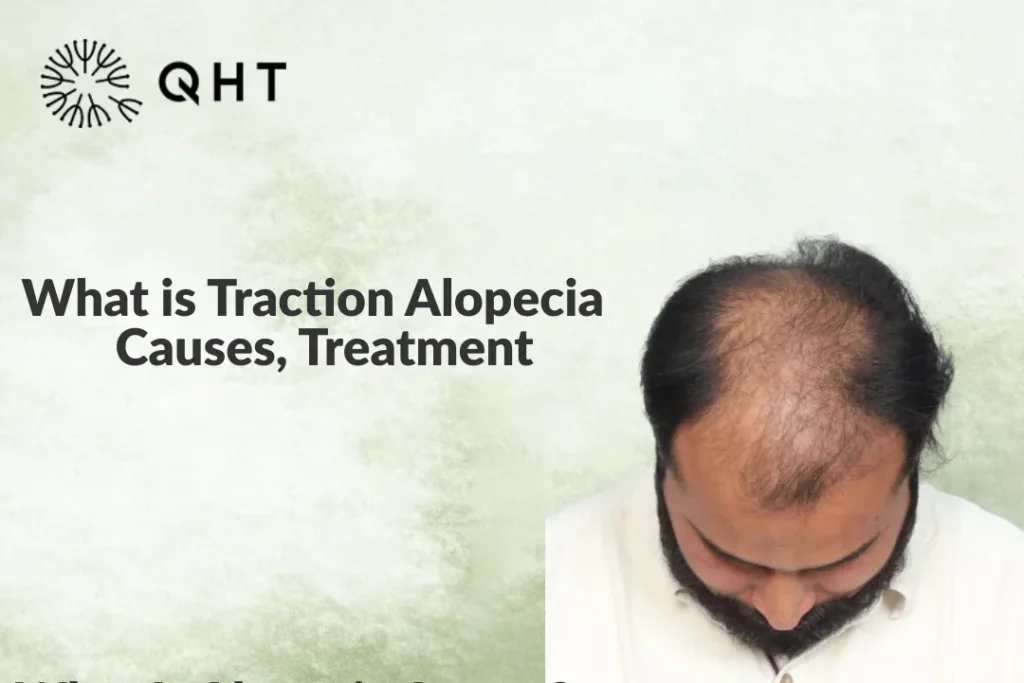
There are many causes of hair loss, but one even rarely mentioned is Traction Alopecia. This differs from hereditary hair loss in that it results from constant pulling or tension being applied to the hair. It is most commonly seen in individuals who regularly wear tight hairstyles such as ponytails, braids or pigtails and in those who use hair extensions or engage in other styling techniques for extended periods.
The good news is that traction alopecia is preventable and in some case reversible if detected early. But if the condition worsens and results in permanent destruction of the hair follicles, then treatments like a FUE Hair Transplant in Hyderabad may be suggested.
What is Traction Alopecia?
Traction Alopecia is a form of hair loss that occurs when the hair shafts are under to excessive or constant tension. The constant tension weakens the hair follicle over time, and ultimately results in thinning of hair and bald spots.
It generally affects the frontal hairline, temples and areas of highest traction. It can affect men and women, but is more common in women (due to certain hairstyling practices).
What Causes Traction Alopecia
Traction alopecia can be caused by many things. Some of the most common are:
1. Tight Hairstyles
Hairstyles that pull hair back tightly can put too much pressure on hair follicles. These are:-
- Tight ponytails
- Braids
- Cornrows
- Buns
- Dreadlocks
When you wear these styles regularly, you are more likely to get traction alopecia.
2. Hair Extensions and Weaves
Hair extensions and weaves add mass to the natural hair. The added tension can fatigue the roots of the hair and ultimately result in hair loss, particularly when it is used nonstop.
3. Tight Head Coverings
Traction alopecia can be increased by the regular use of tight turbans, headscarves, helmets and the like if you always have them shaped tightly around the same sections of scalp.
4. Chemical and Heat Treatments
While not direct causes of the issue, repetitive chemical processing and over styling with heat can make strands of hair weaker, leading to more tension damage.
5. Occupational and Cultural Habits
Certain professions and cultural practices involve hairstyles that place extended tension on the hair making developing traction alopecia more likely.
Signs and Symptoms of Traction Alopecia
Early recognition of symptoms can be helpful to avoid permanent hair loss.
The following are some of the common symptoms:
- Slow thinning along the hairline
- Receding edges around the temples
- Little lumps on the scalp
- Affected areas may be red or tender
- Almost all hairs broken near the scalp
Treatment Options for Traction Alopecia
Treatment depends on how bad the condition’s how much damage is done to the hair follicles.
1. Change How You Style Your Hair
The thing you need to do is stop using hairstyles that pull too hard on your hair.
Some things you can do are:
- Wear loose hairstyles
- Do not wear ponytails and braids
- Do not use too many hair extensions
- Try not to use heat and chemicals on your hair too much
2. PRP Therapy
This therapy uses the patients platelets to help the hair grow and heal the hair follicles. It can be very helpful for people with traction alopecia that’s not too bad.
3. FUE Hair Transplant
For people who have lost their hair for good, a FUE Hair Transplant in Hyderabad, can be a solution that lasts a long time.
If you are looking for a hair transplant in Hyderabad you should choose a clinic that has experienced doctors, advanced technology and a proven record of successful results.
When should one visit a Hair Doctor
See a hair restoration specialist if you have:
- Persistent hairline recession
- Bald spots
- Heavy hair shedding
- Scalp discomfort or pain
Early intervention provides the best opportunity for treatment success and hair recovery.
Conclusion
Traction Alopecia is an avoidable type of hair loss, resulting from continued pressure applied to hair follicles. Tight hairstyles, extensions and constant pulling can permanently harm the scalp and cause hair loss. Early stage traction alopecia can generally be reversed with proper care and treatment, however, late stages may also be treated with FUE Hair Transplant in Hyderabad. If there has been irreversible follicle damage, the best hair transplant in Hyderabad might be your avenue to restoring that natural hair growth and your confidence with a solution that truly works for the long term.

